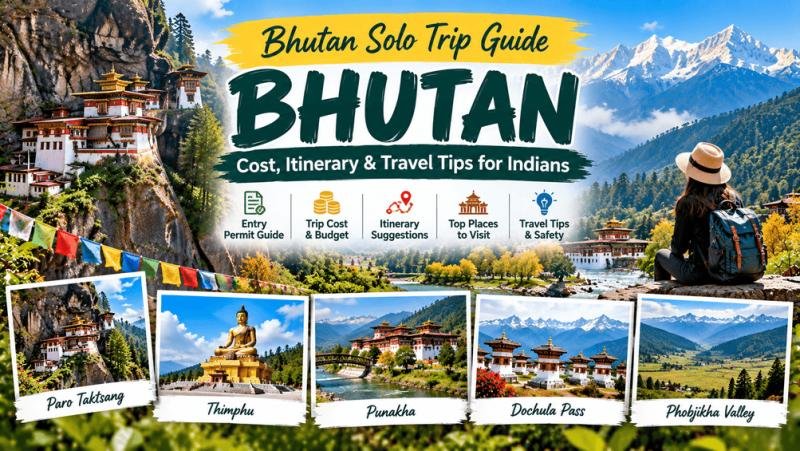
Bhutan Solo Trip Guide: Cost, Itinerary & Travel Tips for Indians
Planning a solo trip to Bhutan from India? Known as the Land of the Thunder Dragon, Bhutan is a beautiful Himalayan destination offering peaceful monasteries, mountain valleys, traditional villages, scenic roads and a unique cultural experience.
Whether you want to explore the streets of Thimphu, admire the famous Tiger's Nest Monastery in Paro or enjoy the natural beauty of Punakha, a solo journey through Bhutan can be a memorable experience.
The good news is that Indian travellers do not need a traditional visa to visit Bhutan. However, they must obtain an entry permit and follow the country's tourism requirements, including the applicable Sustainable Development Fee (SDF).
If you are researching Bhutan solo trips, this guide covers everything you need to know, including the Bhutan solo trip cost, entry permits, transportation, accommodation, safety, suggested itineraries and practical travel tips.
Quick Overview of a Bhutan Solo Trip
| Travel Detail | Information |
|---|---|
| Destination | Bhutan |
| Ideal duration | 5–7 days |
| Best for | Nature, culture, monasteries and mountain experiences |
| Popular destinations | Thimphu, Paro and Punakha |
| Entry requirement for Indians | Entry permit |
| Indian tourist SDF | ₹1,200 per person per night |
| Currency | Bhutanese Ngultrum (BTN) |
| Indian Rupee | Accepted in many places |
| Best travel seasons | March–May and September–November |
| Main arrival points | Phuentsholing by road or Paro by air |
| Local guide | Required for tourists travelling beyond designated border towns |
Is Bhutan Suitable for Solo Travel?
Yes, Bhutan can be a rewarding destination for solo travellers from India. Its mountain landscapes, cultural attractions, peaceful surroundings and established tourism infrastructure make it appealing for people who prefer exploring at their own pace.
However, solo travel in Bhutan requires a little more planning than travelling independently in some other destinations.
Bhutan allows visitors to arrange their own flights, accommodation and travel plans, but tourists travelling beyond designated border towns must be accompanied by a certified local guide. You should also arrange suitable transportation and Department of Tourism-certified accommodation.
Why Consider a Solo Trip to Bhutan?
- Peaceful environment: Explore monasteries, valleys and traditional towns away from crowded tourist destinations.
- Cultural experiences: Learn about Bhutanese traditions, architecture, festivals and local lifestyles.
- Mountain scenery: Enjoy Himalayan landscapes, forests and beautiful valleys.
- Adventure opportunities: Explore hiking routes and trekking experiences with approved guides.
- Flexible planning: Choose your preferred destinations, travel dates and sightseeing activities.
- Easy currency conversion: The Bhutanese Ngultrum is pegged at parity with the Indian Rupee.
A solo trip does not mean you must arrange every activity without assistance. You can plan your journey independently while hiring a local guide and driver for the required services.
Bhutan Entry Permit for Indian Solo Travellers
One of the most important steps when planning solo travel to Bhutan is arranging your entry permit.
Indian nationals do not require a visa to enter Bhutan, but they must obtain an entry permit from Bhutanese immigration authorities.
Documents Required for Indian Citizens
Carry the following documents:
- Original Indian passport with at least six months of validity, or an original Indian Voter ID card.
- Two recent passport-size photographs.
- Additional documents if requested by immigration authorities.
- For children below 18 years, an original birth certificate in English or a valid passport, with a legal guardian.
Aadhaar Card is not a general substitute for the passport or Voter ID required for entry into Bhutan. The Consulate General of India mentions a limited Aadhaar provision for visiting Phuentsholing only.
How to Obtain a Bhutan Entry Permit
You can apply for your permit online through the official Bhutan immigration or tourism permit system. Indian tourists may also obtain a permit at an eligible point of entry, subject to immigration processing.
The general process is:
- Prepare your original identity document and photographs.
- Complete the tourist permit application through the official portal.
- Provide the required personal and travel details.
- Submit the application and complete any applicable payment.
- Keep a copy of your approved permit for your journey.
Applying in advance is recommended because permits on arrival may involve waiting, particularly during busy travel periods.
Official resources:
- Bhutan Immigration: https://immi.gov.bt/
- Bhutan Tourism: https://bhutan.travel/
- Department of Immigration: https://www.doi.gov.bt/
Sustainable Development Fee (SDF) for Indian Travellers
The Sustainable Development Fee is an important part of your Bhutan travel budget.
As of October 2026, Indian tourists are required to pay:
- Adults: ₹1,200 per person per night.
- Children aged 6–12 years: ₹600 per person per night.
- Children below 6 years: Exempt from SDF.
For example, if you stay in Bhutan for five nights, an adult Indian traveller will pay ₹6,000 towards SDF.
| Duration | SDF for One Adult |
|---|---|
| 3 nights | ₹3,600 |
| 4 nights | ₹4,800 |
| 5 nights | ₹6,000 |
| 6 nights | ₹7,200 |
| 7 nights | ₹8,400 |
The SDF is separate from hotel charges, food, transportation, guide fees and sightseeing expenses.
There is also a limited 24-hour SDF waiver for visitors staying within designated areas of certain border towns, including Phuentsholing, subject to the applicable conditions. This should not be confused with a general exemption for travelling elsewhere in Bhutan.
Check the current SDF rules before departure because government policies and exemptions can change.
Bhutan Solo Trip Cost from India
The total Bhutan solo trip cost depends on your travel route, accommodation category, number of nights, transportation, guide charges and sightseeing preferences.
Solo travellers may spend more per person on private transportation because they cannot share vehicle costs with other travellers.
The following figures are illustrative planning estimates for one adult Indian traveller for a five-night, six-day trip. They are not live quotations.
Estimated Bhutan Solo Trip Budget
| Expense | Estimated Cost |
|---|---|
| Entry permit | No separate tourist visa required; verify applicable processing charges |
| SDF for 5 nights | ₹6,000 |
| Budget accommodation | ₹5,000–₹8,000 |
| Food and refreshments | ₹3,000–₹5,000 |
| Local guide | ₹5,000–₹8,000 |
| Transportation | ₹8,000–₹12,000 |
| Sightseeing and activities | ₹2,000–₹4,000 |
| Miscellaneous expenses | ₹1,500–₹2,500 |
| Estimated total | ₹30,500–₹45,500 |
The estimates depend on the actual services arranged. A private vehicle, premium hotels, longer distances and additional activities can increase the budget.
Your journey to Jaigaon or Bagdogra, flights to Paro, and travel from your home city to the Bhutan entry point are not included in this estimate.
Budget, Standard and Comfortable Bhutan Solo Trips
| Travel Style | Approximate Budget for 5 Nights, 6 Days |
|---|---|
| Budget-conscious solo trip | ₹30,000–₹36,000 |
| Standard solo trip | ₹36,000–₹45,000 |
| Comfortable solo trip | ₹45,000–₹60,000+ |
These are indicative planning ranges, not fixed package prices. Confirm accommodation, guide, vehicle, SDF and sightseeing inclusions before booking.
How to Reduce Your Bhutan Solo Travel Cost
- Book accommodation in advance.
- Avoid unnecessary hotel changes.
- Plan destinations geographically to reduce driving.
- Travel during periods when accommodation demand is comparatively lower.
- Compare local transport and guide quotations.
- Choose accommodation that includes breakfast.
- Avoid adding too many distant destinations to a short itinerary.
- Consider joining a small group for selected sightseeing activities where permitted.
Money-saving tip: Do not compromise on the required guide or accommodation arrangements just to reduce your travel budget. Plan your expenses around the current Bhutanese tourism requirements.
Best Places to Visit During a Bhutan Solo Trip
Bhutan has several beautiful destinations, but first-time solo travellers can begin with Thimphu, Paro and Punakha.
1. Thimphu – Explore Bhutan's Capital
Thimphu is the capital of Bhutan and an excellent starting point for understanding the country's culture and lifestyle.
The city combines traditional Bhutanese architecture with modern facilities, markets, monasteries and cultural attractions.
Popular places to visit include:
- Buddha Dordenma Statue
- Tashichho Dzong
- Memorial Chorten
- National Folk Heritage Museum
- Simply Bhutan Museum
- Local handicraft markets
Thimphu is a good destination for solo travellers who enjoy cultural sightseeing, local food and relaxed city exploration.
2. Paro – A Beautiful Himalayan Valley
Paro is one of Bhutan's most picturesque destinations. Surrounded by mountains and traditional buildings, the valley is known for its cultural landmarks and natural scenery.
Popular attractions include:
- Paro Taktsang (Tiger's Nest Monastery)
- Rinpung Dzong
- National Museum of Bhutan
- Kyichu Lhakhang
- Paro town and local markets
Paro is also home to Bhutan's main international airport, making it an important entry point for air travellers.
3. Tiger's Nest Monastery – A Memorable Hiking Experience
Tiger's Nest Monastery, also known as Paro Taktsang, is one of Bhutan's most famous attractions.
The monastery is dramatically positioned on a cliff above the Paro Valley. Reaching it requires a challenging uphill hike through forested mountain terrain.
Why visit?
- Experience one of Bhutan's most iconic landmarks.
- Enjoy beautiful mountain and valley views.
- Learn about Bhutanese Buddhist traditions.
- Experience a memorable Himalayan hiking route.
The hike requires reasonable physical fitness. Start early, wear suitable footwear and follow your guide's instructions.
4. Punakha – Explore the Beautiful Valley
Punakha is known for its rivers, green valleys and traditional architecture. It is one of the most scenic destinations to include in a Bhutan itinerary.
Popular attractions include:
- Punakha Dzong
- Punakha Suspension Bridge
- Chimi Lhakhang
- Scenic countryside and river landscapes
Punakha is an excellent choice for travellers who want to experience Bhutan beyond its capital.
5. Dochula Pass – Enjoy Himalayan Views
Dochula Pass is a beautiful mountain pass between Thimphu and Punakha.
It is famous for its 108 memorial chortens and scenic surroundings. On clear days, visitors may enjoy impressive Himalayan views.
The pass is a popular stop during road journeys between the two destinations.
6. Phobjikha Valley – Experience Bhutan's Natural Beauty
Phobjikha Valley is known for its wide open landscapes, peaceful surroundings and natural environment.
The valley is especially famous as a winter habitat for black-necked cranes, which migrate to the region during the colder months.
Popular experiences include:
- Visiting Gangtey Monastery.
- Exploring the valley's scenic landscapes.
- Learning about local conservation initiatives.
- Enjoying peaceful countryside surroundings.
If you have extra days, Phobjikha can be a valuable addition to your solo itinerary.
Bhutan Solo Trip Itinerary: 5 Nights, 6 Days
For first-time Indian travellers, a five-night, six-day itinerary covering Thimphu, Paro and Punakha offers a good introduction to Bhutan.
Day 1: Arrive in Phuentsholing and Travel to Thimphu
Arrive at Jaigaon–Phuentsholing and complete the necessary immigration formalities.
Meet your local guide and driver, then begin your journey towards Thimphu.
Depending on arrival time, enjoy the scenic mountain drive and check into your accommodation.
Overnight stay in Thimphu.
Day 2: Thimphu Local Sightseeing
Explore the cultural and historical attractions of Bhutan's capital.
Suggested places include:
- Buddha Dordenma.
- Memorial Chorten.
- Tashichho Dzong.
- National Folk Heritage Museum.
- Local handicraft markets.
Return to your hotel after sightseeing.
Overnight stay in Thimphu.
Day 3: Thimphu to Punakha via Dochula Pass
After breakfast, travel towards Punakha.
Stop at Dochula Pass to explore the 108 chortens and enjoy the mountain scenery when visibility permits.
Continue to Punakha and visit:
- Punakha Dzong.
- Punakha Suspension Bridge.
- Selected local attractions depending on available time.
Overnight stay in Punakha.
Day 4: Punakha to Paro
After breakfast, begin your journey towards Paro.
Enjoy the scenic mountain drive and explore selected attractions after arrival, depending on the travel time.
You may visit Rinpung Dzong or explore Paro town.
Overnight stay in Paro.
Day 5: Tiger's Nest Monastery and Paro Sightseeing
Start early for the hike to Tiger's Nest Monastery.
Spend time exploring the monastery surroundings and enjoying the views.
After returning, you can visit selected local attractions depending on your energy and schedule.
Overnight stay in Paro.
Day 6: Departure
After breakfast, proceed towards your departure point.
If you are travelling by road, arrange your transfer according to the border formalities and onward journey.
If you are flying from Paro, reach the airport with sufficient time before departure.
This itinerary is indicative. A journey beginning in Phuentsholing and ending at Paro Airport may require adjustments to transport and departure arrangements.
How to Reach Bhutan from India
Indian travellers can enter Bhutan by road or air.
1. By Road via Jaigaon–Phuentsholing
Jaigaon in West Bengal is located next to Phuentsholing in Bhutan.
This is a popular route for Indian travellers because it provides access to Bhutan by road.
The general journey is:
- Reach Bagdogra, Siliguri or New Jalpaiguri.
- Travel by road to Jaigaon.
- Complete the required immigration formalities.
- Obtain or present your entry permit.
- Continue towards Thimphu or your planned destination with your arranged local guide and transport.
This route can be suitable for travellers who want to explore Bhutan without booking an international flight.
2. By Air to Paro
Paro International Airport is Bhutan's main international airport.
Flights connect Paro with selected cities, including Indian destinations, depending on airline schedules.
Air travel is convenient for people who want to save road travel time, although ticket prices can vary considerably.
Check the current flight schedules and entry requirements before booking.
Transportation in Bhutan for Solo Travellers
Transportation is one of the most important considerations when planning solo travel in Bhutan.
Unlike some popular backpacking destinations, Bhutan is not always convenient for independent point-to-point travel using public transport.
Available Transportation Options
Private vehicle with driver: A convenient option for visiting multiple destinations. It offers flexibility but can be expensive for one person.
Local tour operator: A local operator can coordinate your guide, vehicle, accommodation and sightseeing arrangements.
Public transport: Buses operate on selected routes, but schedules and availability may not suit every tourist itinerary. Confirm current services before relying on them.
Domestic flights: Useful for selected longer-distance journeys where routes and schedules are available.
Walking: Suitable for exploring town centres and selected attractions, but not a replacement for intercity transport.
Can Indians Drive Their Own Vehicles in Bhutan?
Indian-registered vehicles can enter Bhutan subject to applicable permissions, documentation and charges.
The official Bhutan tourism guidance currently lists a vehicle charge of Nu. 4,500 per car per day for vehicles travelling beyond the designated border-town area, with additional requirements and a mandatory guide.
If you are travelling alone, hiring a local vehicle and driver may be more practical than arranging a self-drive trip.
Is Bhutan Safe for Solo Travellers?
Bhutan is generally regarded as a safe destination for visitors, including solo travellers. However, every trip requires basic precautions, particularly when travelling through mountain areas.
Safety Tips for Solo Travellers
- Use certified local guides: Follow the current tourism requirements and choose approved professionals.
- Book registered accommodation: Stay in properties approved by Bhutan's Department of Tourism.
- Share your itinerary: Keep family or friends informed about your travel plans.
- Avoid isolated areas after dark: Be cautious when exploring unfamiliar places.
- Check road conditions: Rain, landslides and mountain weather can affect travel.
- Prepare for altitude: Some destinations are at high elevations, so avoid rushing your activities.
- Keep emergency contacts: Save your accommodation, guide and local emergency details.
- Protect your belongings: Keep travel documents, money and electronic devices secure.
- Follow local customs: Dress respectfully at monasteries and religious sites.
- Consider travel insurance: It can help with unexpected medical or travel-related expenses.
Bhutan's official tourism guidance describes the country as safe for visitors but also highlights environmental risks such as flooding, landslides and monsoon-related transport disruption.
Best Time for a Bhutan Solo Trip
Bhutan can be visited throughout the year, but the best time depends on your preferred weather, activities and destinations.
| Season | Months | What to Expect |
|---|---|---|
| Spring | March–May | Pleasant weather, blooming flowers and suitable conditions for sightseeing |
| Summer/Monsoon | June–August | Green landscapes, rainfall and possible road disruptions |
| Autumn | September–November | Generally clear skies, pleasant temperatures and festival opportunities |
| Winter | December–February | Cold weather, quieter travel periods and possible snowfall at higher elevations |
Spring: March to May
Spring is a popular season for visiting Bhutan. The weather is often pleasant, and the valleys become colourful with blooming flowers.
It is a good choice for sightseeing, cultural experiences and selected hikes.
Autumn: September to November
Autumn is another excellent season for many travellers.
The weather often becomes clearer after the monsoon, creating good opportunities for mountain views and outdoor activities.
Winter: December to February
Winter can be cold, especially in higher-altitude areas.
However, travellers who enjoy quieter destinations and winter landscapes may find this season appealing.
Monsoon: June to August
The monsoon brings greenery and rainfall, but it can also affect road travel and outdoor activities.
If you plan to travel during this period, keep your itinerary flexible.
Essential Travel Tips for Indians Visiting Bhutan Alone
Before starting your Bhutan solo trip, remember these important points:
- Carry your original passport or Voter ID.
- Keep digital and printed copies of your permit.
- Arrange your guide and transportation in advance.
- Confirm that your accommodation is Department of Tourism-certified.
- Budget for the SDF separately.
- Carry some Indian currency and Bhutanese Ngultrum.
- Check whether your bank cards work internationally.
- Buy a local SIM card for convenient communication.
- Carry warm clothing, even during warmer months.
- Wear comfortable shoes for sightseeing and hiking.
- Check weather and road conditions before long journeys.
- Respect religious customs and photography restrictions.
Bhutan Solo Trip vs Group Tour: Which Is Better?
Both solo and group travel have advantages. The right option depends on your budget, travel preferences and comfort with independent planning.
| Factor | Solo Trip | Group Tour |
|---|---|---|
| Travel flexibility | More control over personal schedule | Follows a planned itinerary |
| Transportation cost | Can be higher per person | Shared among travellers |
| Accommodation | Choose according to your preference | Usually arranged by the operator |
| Guide arrangements | Must be organised according to requirements | Usually coordinated by the operator |
| Social experience | More independent | Opportunity to meet other travellers |
| Planning effort | More responsibility | Less planning required |
| Budget control | Depends on individual arrangements | Easier to understand package inclusions |
When Should You Choose a Solo Trip?
Choose solo travel if you enjoy planning your own itinerary, prefer flexibility and are comfortable coordinating accommodation, transportation and local guide services.
When Should You Choose a Group Tour?
A group tour may be more suitable if you want shared transportation costs, a planned sightseeing schedule and assistance with travel arrangements.
For a first-time Bhutan visitor, comparing both options before booking can help you make a better decision.
Frequently Asked Questions About Bhutan Solo Trips
1. Can Indians travel to Bhutan alone?
Yes. Indian citizens can plan an independent trip to Bhutan. However, they must obtain the required entry permit and follow the current tourism requirements, including using a certified local guide when travelling beyond designated border towns.
2. Is Bhutan safe for solo female travellers?
Bhutan is generally considered a safe destination for visitors. Solo female travellers should still follow standard precautions, book approved accommodation, use trusted transport and share their itinerary with someone they trust.
3. What is the Bhutan solo trip cost from India?
An indicative five-night, six-day trip may cost around ₹30,000–₹45,500 per person, excluding travel to the Bhutan entry point or international flights. The actual amount depends on accommodation, guide fees, transport and sightseeing.
4. Do Indians need a visa for Bhutan?
No. Indian nationals do not need a traditional visa, but they must obtain an entry permit using an accepted travel document, such as an original Indian passport or Voter ID card.
5. What is the SDF for Indian tourists in Bhutan?
As of October 2026, Indian adult tourists pay ₹1,200 per person per night. Children aged 6–12 receive a 50% concession, while children below 6 years are exempt.
6. Can I visit Bhutan without a tour operator?
Yes. Bhutan allows visitors to plan their trips independently. However, tourists travelling beyond designated border towns must be accompanied by a certified local guide, and approved accommodation and other requirements must be followed.
7. How many days are enough for a Bhutan solo trip?
Five to seven days are suitable for exploring major destinations such as Thimphu, Paro and Punakha. A longer trip is recommended if you want to explore additional valleys and remote regions.
8. What is the best time for solo travel to Bhutan?
March to May and September to November are popular periods for sightseeing and outdoor activities. Weather conditions vary by region and altitude, so check local forecasts before departure.
9. Can I use Indian Rupees in Bhutan?
Indian Rupees are accepted in many places in Bhutan, and the Bhutanese Ngultrum is pegged at parity with the Indian Rupee. However, carry smaller denominations and some local currency for convenience.
10. Is a guide compulsory in Bhutan?
Bhutan's current official tourism guidance states that visitors must be accompanied by a certified local guide when travelling beyond designated border towns. Confirm the latest requirements before your trip.
Plan Your Bhutan Journey with YourTripPartners
A solo trip to Bhutan can be an unforgettable experience, offering a combination of Himalayan scenery, traditional monasteries, peaceful valleys and cultural attractions.
However, arranging the right entry permit, accommodation, guide, transportation and sightseeing schedule is important for a smooth journey.
If you prefer professional assistance instead of managing every arrangement independently, YourTripPartners can help you explore suitable Bhutan travel options.
Whether you are planning a solo holiday, a private trip or a group journey, choose an itinerary that matches your travel dates, budget and preferred experiences.
Planning your Bhutan trip from India? Contact YourTripPartners to discuss your travel dates, number of days and preferred destinations.
Discover Bhutan with a thoughtfully planned Himalayan holiday.